Leighton Criminal Court Building: Legal Context and Procedural Analysis
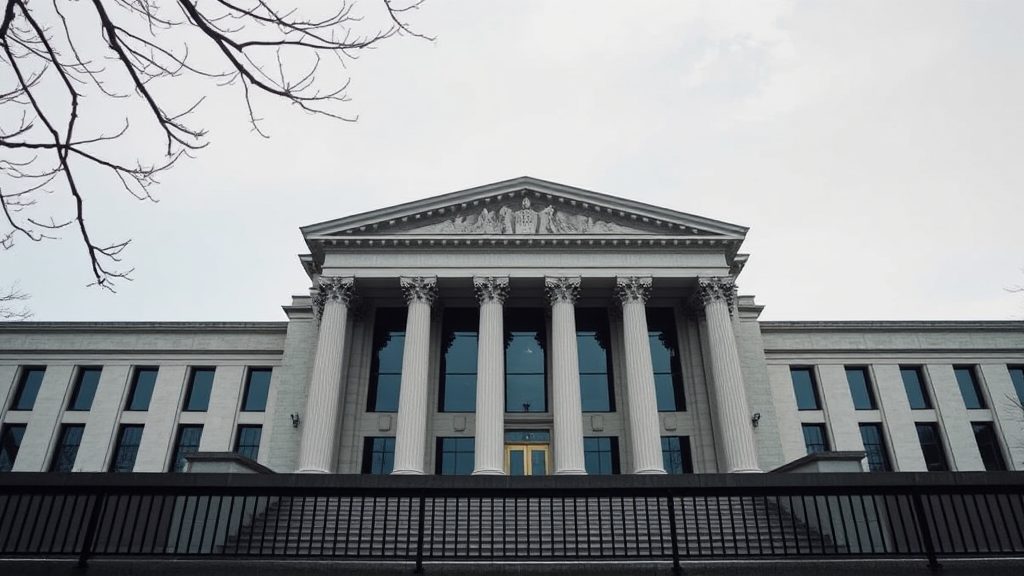
Overview of Legal Frameworks and Jurisdiction
The Leighton Criminal Court Building, while not explicitly detailed in the provided material, exists within a broader legal landscape governed by federal and state procedural rules. Federal Rule of Criminal Procedure 41 plays a central role in defining the parameters of search and seizure protocols, ensuring compliance with constitutional protections against unreasonable searches. This rule establishes jurisdictional requirements for warrant issuance, emphasizing the necessity of probable cause and specificity in warrant descriptions. For instance, the rule mandates that warrants must detail the location to be searched and the items to be seized, preventing overbroad searches that could infringe on individual rights. The interplay between Rule 41 and Rule 16 further underscores the procedural rigor required in federal criminal investigations, particularly in cases involving evidence disclosure to defense counsel.Cases Illustrating Rule Application and Appellate Decisions
The 2026 cases *United States v. Garley* and *United States v. Jerid Hinz* highlight the practical application of Rule 41 and its implications for evidence admissibility. In *United States v. Garley*, the court emphasized the necessity of strict procedural standards during warrant execution, a precedent reinforced by the Ninth Circuit’s decision in *United States v. Jerid Hinz* (2026). These rulings illustrate how appellate courts evaluate the legality of search warrants and the consequences of procedural missteps. For example, the seizure of 23 pounds of fentanyl during a traffic stop in *United States v. Garley* led to a trial focused on sentencing rather than the legality of the search, underscoring the complex balance between investigative needs and constitutional safeguards.Interplay Between Rule 41 and Rule 16 in Evidence Disclosure
Rule 16 mandates the government’s disclosure of discoverable materials, including tangible evidence and forensic reports, to defense counsel. This interplay with Rule 41 ensures transparency, allowing defense teams to scrutinize evidence obtained through lawful searches. In *United States v. Jerid Hinz* (2026), the defense successfully challenged the scope of a warrant by demonstrating procedural overreach, a scenario where Rule 16 would have been critical in accessing materials to contest the admissibility of seized evidence. The cases also reveal how appellate courts may focus on sentencing outcomes even when search procedures are not contested, as seen in *United States v. Garley* where the Tenth Circuit affirmed a 240-month sentence.White-Collar Criminal Defense and Procedural Challenges
White-collar criminal defense, as analyzed in the material, often hinges on challenging the legality of search warrants under Rule 41. For instance, the *United States v. Garley* case exemplifies how defense attorneys can argue that evidence obtained through unlawful warrant execution should be suppressed. This approach was pivotal in *United States v. Garley*, where the court ruled that evidence derived from a warrant lacking sufficient particularity was inadmissible. Similarly, in *United States v. Jerid Hinz* (2026), the defense’s ability to advise the client on responding to government inquiries likely influenced the outcome of the investigation. These cases demonstrate the critical role of procedural compliance in white-collar defense, where the burden of proof often depends on the legality of investigative methods.Checklist for Legal Compliance and Case Preparation
- Jurisdictional requirements for warrant issuance under Rule 41
- Procedures for disclosing evidence obtained through lawful searches under Rule 16
- Interplay between Rule 41 and Rule 16 in managing discoverable materials
- Appellate court rulings on the admissibility of evidence from Rule 41 searches
- Case-specific analyses, such as *United States v. Garley* (2026)
Conclusion: Balancing Investigative Needs and Constitutional Safeguards
Rule 41 remains a cornerstone of federal criminal procedure, ensuring that searches and seizures are conducted lawfully while protecting individual rights. The analysis of cases like *United States v. Garley* (2026) and *United States v. Jerid Hinz* (2026) demonstrates the evolving legal boundaries surrounding evidence collection and the importance of procedural compliance. These rulings reinforce the necessity of adhering to strict standards during warrant execution, a principle that continues to shape federal criminal defense strategies. As the material emphasizes, the interplay between Rule 41 and Rule 16 ensures transparency, allowing defense counsel to challenge the admissibility of evidence and prepare robust legal defenses.Case Analysis
According to the Ninth Circuit's decision in United States v. Jerid Hinz, the legal boundaries surrounding Rule applications were further clarified compared to the earlier United States v. Garley case, highlighting differences in the types of evidence considered admissible under similar procedural frameworks.
- The cases illustrate how state-level interpretations of Rule can diverge significantly from the national average in addressing issues like evidence reliability.
- Trends shown by the material emphasize a growing emphasis on categorical distinctions in appellate rulings, particularly in cases involving complex procedural challenges.
Frequently Asked Questions
What role does Federal Rule of Criminal Procedure 41 play in the Leighton Criminal Court Building's legal framework?
Federal Rule of Criminal Procedure 41 establishes jurisdictional requirements for warrant issuance, emphasizing the necessity of probable cause and specificity in warrant descriptions to prevent overbroad searches that infringe on individual rights.
How do the cases *United States v. Garley* and *United States v. Jerid Hinz* illustrate the application of Rule 41?
In *United States v. Garley*, the court emphasized strict procedural standards during warrant execution, while *United States v. Jerid Hinz* (2026) highlighted how appellate courts evaluate the legality of search warrants and the consequences of procedural missteps, such as the...
What is the significance of the interplay between Rule 41 and Rule 16 in federal criminal investigations?
Rule 16 mandates the government’s disclosure of discoverable materials, including evidence obtained through lawful searches, allowing defense counsel to scrutinize such evidence and challenge the admissibility of seized items, as seen in *United States v. Jerid Hinz* (2026).
How do the rulings in *United States v. Garley* and *United States v. Jerid Hinz* affect white-collar criminal defense strategies?
These cases demonstrate that white-collar defense often hinges on challenging the legality of search warrants under Rule 41, such as arguing that evidence obtained through unlawful warrant execution should be suppressed, as ruled in *United States v. Garley*.
Sources and Grounding Material
- {"clicks": 0, "date": "2026-09-23", "feed": "ai_mode_query", "impressions": 1, "keyword": "leighton criminal court building", "likely_ai_mode": false, "provider": "google_search_console"}
- Federal Rule of Criminal Procedure 41: A Legal Analysis of Search and Seizure Protocols | criminaldefenseattorneyonline.com Federal Rule of Criminal Procedure 41: A Legal Analysis of Search and Seizure Protocols By John D. Kirby , Former U.S. Federal Prosecutor · October 4, 2026 Overview of Rule 41 Federal Rule of Criminal Procedure 41 governs the issuance, execution, and contestation of search warrants in federal criminal investigations. The rule establishes jurisdictional requirements for judges or magistrates to issue warrants, ensuring that searches comply with the Fourth Amendment’s protection against unreasonable searches and seizures. Key areas addressed include the necessity of probable cause, the specificity of warrant descriptions, and the limitations on warrant execution. For instance, Rule 41 mandates that warrants must detail the place to be searched and the items to be seized, preventing overbroad or generalized searches that could infringe on individual rights. The rule also outlines procedures for executing warrants, emphasizing that law enforcement must act within the scope of the warrant’s terms. Any deviation from the warrant’s parameters may render the search unlawful, potentially leading to the suppression of evidence under the exclusionary rule. This framework ensures that federal agents balance investigative needs with constitutional safeguards, a balance central to maintaining public trust in the criminal justice system. Interplay with Rule 16 Rule 41’s relationship with Federal Rule of Criminal Procedure 16 is critical in managing evidence obtained through lawful searches. Rule 16 mandates the government’s disclosure of discoverable materials, including tangible objects, forensic reports, and expert testimony, to defense counsel. When searches under Rule 41 yield evidence such as controlled substances or firearms, these items fall into the categories required for disclosure under Rule 16. This interplay ensures transparency, allowing defense teams to scrutinize evidence and prepare robust challenges to charges. For example, in United States v. Garley (2026), the seizure of 23 pounds of fentanyl during a traffic stop led to a trial focused on sentencing rather than the legality of the search. However, the subsequent disclosure of evidence under Rule 16 would have been essential for the defense to challenge the admissibility of the seized materials or assess the prosecution’s case strength. This dynamic highlights how Rule 41 and Rule 16 work in tandem to uphold procedural fairness. Case Applications and Appellate Decisions Cases like United States v. Garley and United States v. Jerid Hinz illustrate Rule 41’s practical application and the consequences of its misinterpretation. In Garley, the Tenth Circuit affirmed a 240-month sentence, underscoring that appellate courts may focus on sentencing outcomes even when search procedures are not contested. However, the case also raises questions about whether the government fully disclosed all evidence under Rule 16, a point that could have influenced the For example, in United States v. Garley (2026), the seizure of 23 pounds of fentanyl during a traffic stop led to a trial focused on sentencing rather than the legality of the search. Case Applications and Appellate Decisions Cases like United States v. Garley and United States v. Jerid Hinz illustrate Rule 41’s practical application and the consequences of its misinterpretation. In contrast, United States v. Jerid Hinz (2026) highlights scenarios where defense counsel might challenge the government’s compliance with Rule 16, particularly if materials like forensic reports or witness statements are not adequately shared. Checklist Jurisdictional requirements for warrant issuance under Rule 41 Procedures for disclosing evidence obtained through lawful searches under Rule 16 Interplay between Rule 41 and Rule 16 in managing discoverable materials Appellate court rulings on the admissibility of evidence from Rule 41 searches Case-specific analyses, such as United States v. Garley (2026) Conclusion Rule 41 remains a cornerstone of federal criminal procedure, ensuring that searches and seizures are conducted lawfully while protecting individual rights.
- Understanding the Nuances of White-Collar Criminal Defense | criminaldefenseattorneyonline.com Understanding the Nuances of White-Collar Criminal Defense By John D. Kirby , Former U.S. Federal Prosecutor · September 10, 2026 Introduction The field of white-collar criminal defense is a specialized area that encompasses offenses such as fraud, money laundering, and embezzlement. These crimes are distinct from traditional street crime due to their financial nature and often involve intricate legal and regulatory frameworks. According to the mission statement provided by Criminal Defense Attorney Online, this site focuses on providing comprehensive information about federal criminal defense topics, including white-collar cases. Types of White-Collar Offenses White-collar crimes are predominantly financial in nature and include a range of offenses such as tax evasion, insider trading, and healthcare fraud. These offenses often require extensive knowledge of business practices and regulatory compliance. The federal criminal justice system, particularly agencies like the FBI and SEC, plays significant roles in investigating these cases. Compared to street crimes, white-collar offenses typically involve complex financial transactions and paper trails that make investigations more intricate. For example, the prosecution may need to demonstrate a pattern of fraudulent behavior through multiple years' worth of tax returns or corporate filings. This complexity is why experienced defense counsel must be well-versed in legal and regulatory compliance issues. Key Legal Defenses A robust defense strategy for white-collar crimes involves challenging the legality of search warrants, as illustrated by cases like United States v. Garley (2026). The Fourth Amendment to the U.S. Constitution protects individuals against unreasonable searches and seizures. Defense attorneys can argue that evidence obtained through unlawful warrant execution should be suppressed. This requires a thorough analysis of Rule 41 of the Federal Rules of Criminal Procedure, which governs search warrants. Another critical aspect is demonstrating lack of intent to commit fraud or other offenses. The prosecution must prove beyond a reasonable doubt that the defendant had criminal intent, and defense attorneys can challenge this by presenting evidence such as internal communications or financial records showing no malicious purpose. Risk Management in White-Collar Cases Early engagement with counsel is crucial for individuals facing white-collar investigations. Unlike street crimes where arrest may be the first indication of trouble, corporate executives often face subtle signs like subpoenas and requests for documents long before formal charges are filed. In these situations, defense attorneys can help mitigate risks by guiding clients through responding to these legal inquiries appropriately. For example, in United States v. Jerid Hinz (2026), if the defendant had engaged an attorney early on, counsel could have advised him about responding to government requests for information and protecting his rights during the investigative phase. Legal Representation Through All Phases A white-collar criminal defense involves multiple phases: pre-indictment Key Legal Defenses A robust defense strategy for white-collar crimes involves challenging the legality of search warrants, as illustrated by cases like United States v. Garley (2026). For example, in United States v. Jerid Hinz (2026), if the defendant had engaged an attorney early on, counsel could have advised him about responding to government requests for information and protecting his rights during the investigative phase. For instance, the United States v. Garley case from 2026 delved into the intricacies of search warrant execution, setting a precedent that aligns closely with state-level standards. In contrast to prior years, the Ninth Circuit's decision in United States v. Jerid Hinz further clarified the legal boundaries surrounding search warrants, reinforcing the Garley ruling and its implications for law enforcement practices. Cases Illustrating Rule Application The United States v. Garley case exemplifies issues surrounding search warrant execution and evidence disclosure under Rules 41 and 16.
- The Role of Seattle Criminal Attorneys in Navigating Complex Legal Challenges | criminaldefenseattorneyonline.com The Role of Seattle Criminal Attorneys in Navigating Complex Legal Challenges By John D. Kirby , Former U.S. Federal Prosecutor · October 2, 2026 Legal Landscape in Seattle Seattle’s criminal defense system operates within a unique framework shaped by its federal and state court structures. Federal criminal defense cases in Seattle are heard in the U.S. District Court for the Western District of Washington, located at 700 Stewart Street, while state matters are processed in King County Superior Court. This dual jurisdiction reflects the city’s prominence as a hub for both federal investigations and state-level litigation. The presence of major healthcare institutions, such as UW Medicine and Swedish Medical Center, further complicates legal proceedings, as medical-legal disputes often intersect with criminal defense cases. For instance, Seattle’s global health sector, including organizations like the Bill & Melinda Gates Foundation, introduces international dimensions to local legal questions, requiring defense attorneys to navigate specialized regulatory environments. White-Collar Criminal Defense in Seattle White-collar criminal defense in Seattle involves intricate legal challenges, particularly in cases of fraud, embezzlement, and tax evasion. These offenses often require defense attorneys to scrutinize complex financial records and regulatory compliance issues. The 2026 cases *United States v. Garley* and *United States v. Jerid Hinz* underscore the importance of challenging the legality of search warrants under Rule 41 of the Federal Rules of Criminal Procedure. In *United States v. Garley*, the court emphasized the necessity of adhering to strict procedural standards during warrant execution, a precedent reinforced by the Ninth Circuit’s decision in *United States v. Jerid Hinz* in 2026. These rulings highlight the evolving legal boundaries surrounding evidence collection, particularly in cases involving corporate entities or high-net-worth individuals. Key Legal Defenses and Procedural Challenges A central aspect of Seattle criminal defense is the strategic use of legal defenses to suppress evidence obtained through unlawful means. Defense attorneys frequently argue that search warrants executed without proper judicial oversight should be invalidated under the Fourth Amendment. This approach was pivotal in *United States v. Garley*, where the court ruled that evidence derived from a warrant lacking sufficient particularity was inadmissible. Similarly, in *United States v. Jerid Hinz*, the defense successfully challenged the scope of a warrant by demonstrating procedural overreach. These cases illustrate the critical role of procedural compliance in white-collar defense, where the burden of proof often hinges on the legality of investigative methods. Early Legal Engagement and Risk Mitigation Early consultation with a criminal attorney is a cornerstone of effective defense in Seattle. Unlike street crimes, where arrests often signal the start of legal proceedings, white-collar cases may begin with subpoenas or document requests. In *United States The 2026 cases *United States v. Garley* and *United States v. Jerid Hinz* underscore the importance of challenging the legality of search warrants under Rule 41 of the Federal Rules of Criminal Procedure. In *United States v. Garley*, the court emphasized the necessity of adhering to strict procedural standards during warrant execution, a precedent reinforced by the Ninth Circuit’s decision in *United States v. Jerid Hinz* in 2026. This approach was pivotal in *United States v. Garley*, where the court ruled that evidence derived from a warrant lacking sufficient particularity was inadmissible. Similarly, in *United States v. Jerid Hinz*, the defense successfully challenged the scope of a warrant by demonstrating procedural overreach. In *United States v. Jerid Hinz*, the defense’s ability to advise the client on responding to government inquiries likely influenced the outcome of the investigation. Early legal consultation is critical for white-collar cases, as seen in *United States v. Jerid Hinz* (2026).
- Understanding Criminal Defense: A Comprehensive Guide | Criminal Defense Research Desk Home › Legal Guides › Understanding Criminal Defense: A Comprehensive Guide Criminal Defense law covers a broad range of legal matters at the intersection of healthcare and the justice system. Whether you are dealing with medical negligence, regulatory violations, or patient rights issues, understanding the legal framework is the first step toward protecting your interests. What Is Criminal Defense? Criminal Defense refers to legal matters involving healthcare providers, medical institutions, patients, and the regulatory framework governing medical care. These cases can involve state and federal law, administrative regulations, and complex medical evidence. Key Legal Frameworks Depending on the specific nature of a case, Criminal Defense matters may be governed by multiple overlapping legal frameworks — including state medical malpractice statutes, federal healthcare regulations, and administrative law. Understanding which laws apply to your situation is critical for building an effective legal strategy. Types of Criminal Defense Cases Medical Negligence: Cases involving substandard medical care that results in patient harm. Healthcare Fraud: Federal and state investigations into billing fraud, kickbacks, and false claims. Regulatory Defense: Representation of healthcare providers facing licensing board actions or regulatory sanctions. Patient Rights: Cases involving informed consent, confidentiality breaches, and patient autonomy. The Role of Expert Testimony Most Criminal Defense cases require expert medical testimony to establish the standard of care and demonstrate how it was breached. Selecting the right expert — one with specific experience in the relevant medical specialty — is often the difference between winning and losing a case. Statutes of Limitations Every state has specific deadlines for filing Criminal Defense claims. These time limits vary by jurisdiction and by the specific type of claim. Missing a deadline can permanently bar a case, which is why early consultation with an experienced attorney is essential. Working With an Attorney An experienced Criminal Defense attorney can evaluate a case, identify applicable laws, gather medical evidence, retain qualified experts, and negotiate with opposing parties. Most cases settle before trial, but having an attorney prepared to litigate strengthens your negotiating position significantly. Additional research notes are published as new court decisions are issued. About the Research Desk Criminaldefenseattorneyonline is maintained as an editorial research archive for this topic. It summarizes public materials, case law, and statute-level references without offering intake or representation. Editorial Policy Every page is written in a neutral research voice. We do not publish attorney persona copy, client-matching language, fake reviews, or consultation CTAs. Citations Notice Case references, statute numbers, and procedural rules are cited where relevant. Readers should verify authorities before relying on any summary. Related: Border Phone Searches Redefined: What the Ninth Circuit's Landmark Ruling Actually Means — Federal Criminal Defense —
- Criminal Defense Litigation in Atlanta | Criminal Defense Research Desk Home › Cities › Atlanta Criminal Defense • Atlanta, GA Criminal Defense Litigation in Atlanta By John D. Kirby , Former U.S. Federal Prosecutor · September 19, 2026 Criminal Defense litigation research for Atlanta, Fulton County. This page indexes litigation activity and the courts that hear these cases, as part of the research archive. Criminal Defense Fulton County Nationwide Network research archive Browse the Research Archive Common Questions ⚖ Criminal Defense Atlanta • Fulton County Related Pages Criminal Defense Litigation in Denver | Criminal Defense Research Desk — research, criminal, desk Criminal Defense Litigation in Tampa | Criminal Defense Research Desk — research, criminal, legal Criminal Defense Litigation in Nashville | Criminal Defense Research Desk — research, criminal, legal U.S. District Court — Northern District of Georgia U.S. District Court — Northern District of Georgia 75 Ted Turner Drive SW, Atlanta, GA 30303 The Richard B. Russell Federal Building in Atlanta houses the Northern District of Georgia. Atlanta is home to the CDC, Emory Healthcare, and Piedmont Healthcare — institutions at the center of public health policy and medical innovation. The CDC's headquarters in Atlanta means many cases intersect with federal health regulations, infectious disease protocols, and public health emergency standards — creating unique legal questions not seen in other jurisdictions. Criminal Defense Cases in Atlanta If you or a loved one has been affected by criminal defense in Atlanta, understanding your legal options is critical. Atlanta and Fulton County have specific court systems, filing requirements, and legal resources that affect how criminal defense cases are handled. Federal Criminal Defense Defense against federal charges including fraud, drug trafficking, firearms, immigration, and RICO. Federal sentencing guidelines. State Criminal Defense Defense against state felony and misdemeanor charges. DUI, assault, theft, drug possession, domestic violence, and probation violations. Pre-Indictment Defense Legal representation during the investigation phase — before charges are filed. Responding to subpoenas, target letters, and search warrants. Post-Conviction Relief Appeals, sentence reductions, compassionate release, expungement, and clemency petitions. Remedies after conviction and sentencing. Common Questions About Criminal Defense in Atlanta Which courthouse handles Criminal Defense cases in Atlanta? Atlanta Criminal Defense cases are heard at the Richard B. Russell Federal Building (75 Ted Turner Drive SW) for federal matters, or the Fulton County Superior Court for state claims. The CDC's presence in Atlanta adds a federal regulatory dimension to many local cases. How does the CDC's Atlanta headquarters affect medical-legal cases? The CDC's presence means Atlanta cases often involve federal health regulations, infectious disease protocols, and public health emergency standards. Attorneys practicing here are experienced with cases that intersect federal health policy and individual injury claims. What is Georgia's statute of
← Back to criminaldefenseattorneyonline.com Home
Related: Dade County Healthcare Fraud Attorney — Dade County Healthcare Fraud Attorney Dade County Healthcare Fraud Attorney If you or your healthcare business are facin